If your baby cries after feeds, pulls the legs up, burps a lot or seems gassy, you have probably heard of an anti-colic feeding bottle. In this guide we explain what an anti-colic bottle actually does, what it can and cannot fix, and how to choose the right one in Bangladesh.

What is colic, and how is it related to feeding?
Colic is long, hard-to-settle crying in an otherwise healthy baby, usually starting in the first few weeks and improving by 3–4 months. Doctors do not fully know what causes it. One thing that can make babies more uncomfortable is swallowing air during feeding. That air can cause gas, hiccups, spit-up and fussiness. This is the part an anti-colic bottle helps with.
How does an anti-colic bottle work?
When a baby sucks from an ordinary bottle, a vacuum builds up inside. The nipple can flatten, the baby has to pause and break the seal, and air rushes in through the milk, creating bubbles that the baby swallows.
An anti-colic bottle has a vent or air valve that lets air enter the bottle from outside while your baby drinks. This means:
- Less vacuum, so the nipple does not collapse.
- A smoother, steadier flow of milk.
- Fewer air bubbles in the milk, so your baby swallows less air.
PUR anti-colic options
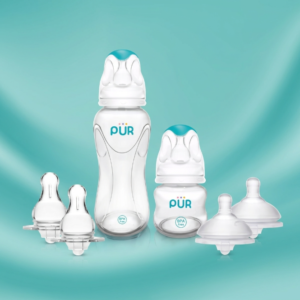
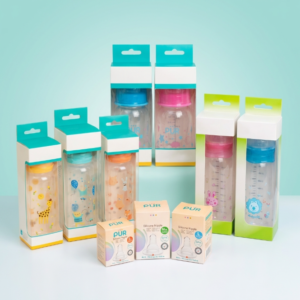
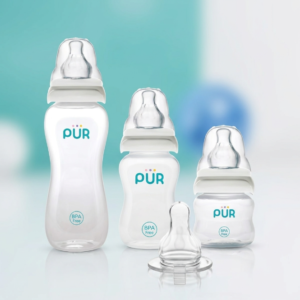
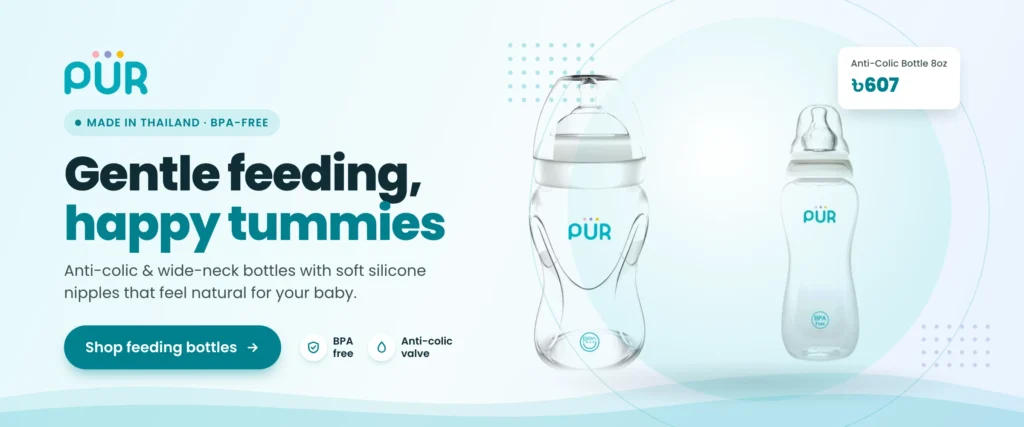
PUR uses two kinds of venting. Some bottles have the valve in the base of the bottle, and some have the valve in the nipple itself.
- PUR Straight Anti-Colic Feeder 9oz/250ml has a removable base with an air valve, so air enters from the bottom and not through the milk. It is easy to clean and suits babies 3 months+.
- PUR Anti-Colic Feeder 4oz/125ml and 8oz/250ml have an ergonomic shape that is easy to hold.
- PUR Comfort Feeder Wide Neck Bottle comes with the Pro-flo nipple, and the wide neck makes formula easy to pour in and the bottle easy to clean.
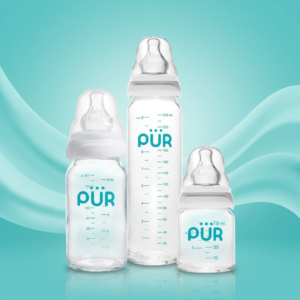
- PUR Glass Feeding Bottles use the Pro-flo anti-colic nipple system for parents who prefer glass.
- Already have a PUR wide neck bottle? The Gentle Touch Wide Neck Nipple adds an air valve at the base of the nipple.
How to choose an anti-colic bottle
- Start with a slow-flow nipple. A nipple that is too fast causes gulping and air swallowing, even in an anti-colic bottle. See our nipple size guide.
- Check that it is easy to clean. Vents and valves must be washed every time. A bottle you can take apart and clean properly is safer than a complicated one.
- Choose BPA-free materials. All PUR bottles and nipples are BPA-free, and the nipples are food-grade silicone.
- Pick the right size. 125ml (4oz) is enough for newborns. Move to 250ml (8oz) as feeds get bigger.
- Buy original. A fake bottle may have a vent that does not seal properly, or plastic of unknown quality. Buy from an authorised seller.
Feeding tips that reduce gas, with any bottle
- Hold your baby fairly upright, not lying flat.
- Tilt the bottle so the nipple is always full of milk, not half air.
- Try paced feeding: let your baby take a few sucks, then tip the bottle down briefly to pause.
- Burp your baby halfway through and at the end of each feed.
- After shaking formula, let the bottle stand for a minute so the bubbles settle.
- Keep your baby upright for 10–15 minutes after the feed.
What an anti-colic bottle cannot do
An anti-colic bottle reduces swallowed air. It does not cure colic, and it will not help if the crying has another cause. Please see a doctor quickly if your baby has a fever, vomits forcefully, has blood in the stool, is not gaining weight, refuses feeds, or if the crying seems different from usual.
Frequently asked questions
Which is the best anti-colic feeding bottle in Bangladesh?
The best bottle is one your baby accepts, with a slow enough flow and a working vent that you can clean easily. PUR anti-colic bottles are made in Thailand from BPA-free materials and are available with cash on delivery from PUR Bangladesh.
From what age can I use an anti-colic bottle?
Anti-colic bottles can be used from birth. Use a slow-flow nipple for newborns. Check each product’s age label for the nipple that comes with it.
Does an anti-colic bottle leak?
A properly assembled bottle should not leak. Leaks usually come from a cross-threaded collar, a nipple that is not seated properly, or a vent part that was not put back after washing.
Is an anti-colic bottle good for breastfed babies?
Yes. A steady, slow flow is closer to breastfeeding, which can make it easier for babies to switch between breast and bottle.
This article is general information and does not replace advice from your doctor.